
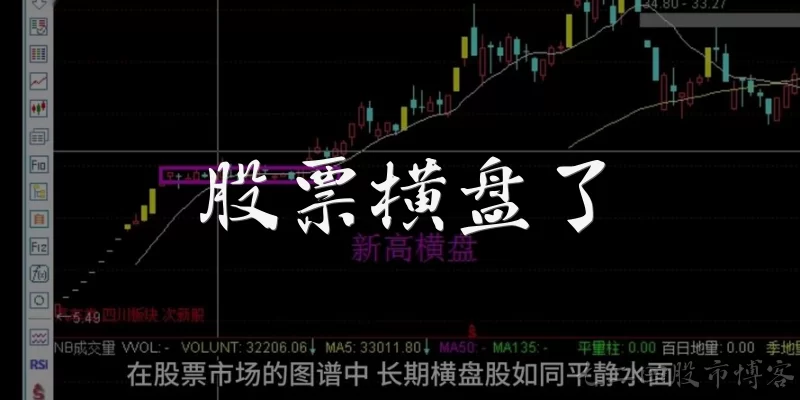
The stock is moving sideways:What does it mean when a stock is moving sideways?
Q: What does it mean when a stock is moving sideways?
A: When a stock is moving sideways, it trades within a relatively narrow price range without a clear upward or downward trend. This consolidation phase often reflects a balance between buyers and sellers, as neither side gains enough momentum to push the price decisively. According to the U.S. Securities and Exchange Commission's 2026 Investor Bulletin on Market Trends, sideways movement can occur during periods of low volatility or uncertainty, such as ahead of earnings reports or major economic announcements. Traders often use technical indicators like Bollinger Bands or the Average Directional Index (ADX) to identify such ranges. While frustrating for trend followers, sideways markets can offer opportunities for range-bound strategies. The SEC notes that investors should assess whether the stock's fundamentals align with the lack of price direction, as prolonged sideways action may signal underlying weakness or simply a pause before a breakout.
Q: How can investors trade a stock that is moving sideways?
A: Investors can trade a sideways-moving stock using range-bound strategies, such as buying near support and selling near resistance. The 2026 report by the Financial Industry Regulatory Authority (FINRA) on volatility notes that options strategies like covered calls or iron condors are popular in such environments because they profit from time decay and low price movement. However, FINRA warns that these strategies carry risks if the stock suddenly breaks out of its range. Alternatively, investors may wait for a confirmed breakout above resistance or breakdown below support, using volume as a confirmation tool. The report emphasizes that discipline and stop-loss orders are crucial to avoid whipsaws. For long-term investors, a sideways stock might be a buying opportunity if fundamentals are strong, but diversification remains key. Always consider the broader market context and sector performance before making decisions.
Q: What are the common causes of a stock moving sideways?
A: A stock may move sideways due to several factors, including market indecision, low trading volume, or a lack of new catalysts. The 2026 Global Market Review by the International Organization of Securities Commissions (IOSCO) highlights that sideways trends often emerge when investors await clarity on earnings, regulatory changes, or macroeconomic data. For instance, a company in a mature industry with stable earnings might see its stock trade in a range if growth prospects are limited. Additionally, algorithmic trading and market-making activities can contribute to range-bound behavior by providing liquidity around a fair value. The IOSCO report also notes that during periods of low volatility, such as summer months, sideways movement becomes more common. External factors like interest rate decisions or geopolitical events can also keep a stock range-bound until a resolution occurs.
Q: Is a stock moving sideways a bullish or bearish signal?
A: A stock moving sideways is generally considered a neutral signal, as it indicates neither bullish nor bearish dominance. However, the interpretation depends on the preceding trend and the broader context. According to the 2026 Technical Analysis Handbook by the Chartered Market Technician Association, a sideways phase after a strong uptrend may be a bullish continuation pattern (e.g., a flag), suggesting accumulation before another leg up. Conversely, sideways movement after a downtrend could be a bearish continuation (e.g., a pennant) or a potential reversal if it forms a bottoming pattern. The handbook stresses that volume and duration are key: a long sideways period with declining volume often precedes a breakout. Investors should combine this with fundamental analysis and market sentiment indicators. Neither bullish nor bearish by itself, sideways action requires patience and a clear breakout strategy.
Dialogue about
Common scenarios of "The stock is moving sideways"
【Retail Investor】 Hey, have you seen the stock today? It's barely moving at all.
【Financial Advisor】 Yeah, it's been trading in a tight range all week. Classic sideways movement.
【Retail Investor】 So what does that mean? Is it a good time to buy or sell?
【Financial Advisor】 Sideways means the price is stuck between support and resistance levels. It's often a period of consolidation.
【Retail Investor】 Consolidation? Like the market is taking a breather?
【Financial Advisor】 Exactly. After a big move up or down, stocks often pause and trade sideways while investors digest the news.
【Retail Investor】 I see. So should I just wait it out?
【Financial Advisor】 That depends on your strategy. If you're a long-term investor, sideways movement isn't necessarily a problem.
【Retail Investor】 But I was hoping to make a quick profit. It's frustrating to see no action.
【Financial Advisor】 Sideways markets can be frustrating for traders. But they also offer opportunities for range trading—buy near support, sell near resistance.
【Retail Investor】 Range trading? That sounds risky. What if it breaks out?
【Financial Advisor】 That's the risk. You need to set stop-loss orders. A breakout could happen in either direction.
【Retail Investor】 How do I know which way it will break?
【Financial Advisor】 You can't know for sure. But you can look at volume, news, and technical indicators for clues.
【Retail Investor】 What indicators should I watch?
【Financial Advisor】 Moving averages, RSI, and Bollinger Bands are useful in sideways markets. They help identify overbought or oversold conditions.
【Retail Investor】 Okay, I'll check those. But honestly, I'm tempted to just sell and move on.
【Financial Advisor】 If you're not comfortable with the uncertainty, it might be wise to reduce your position. But don't make emotional decisions.
【Retail Investor】 You're right. I'll hold for now and keep an eye on it. Thanks for the advice.
【Financial Advisor】 Anytime. Remember, sideways markets don't last forever. Be patient and stick to your plan.