China's stock issuance system:What is China's stock issuance system and how has it evolved?
Q: What is China's stock issuance system and how has it evolved?
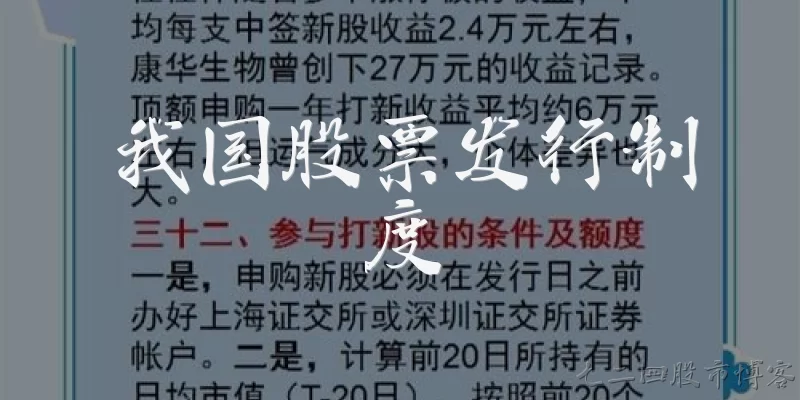
A: China's stock issuance system refers to the regulatory and procedural framework governing how companies list shares on domestic exchanges like the Shanghai and Shenzhen Stock Exchanges. Historically, it operated under a quota-based approval system from the 1990s until the mid-2000s, where the China Securities Regulatory Commission (CSRC) set listing quotas and conducted substantive reviews. This evolved into a merit-based approval system in 2001, emphasizing financial thresholds and compliance. A major shift occurred with the 2019 launch of the STAR Market, which piloted a registration-based system, later expanded to the ChiNext board in 2020 and the main boards in 2023. Under this system, the CSRC focuses on information disclosure rather than company value judgments, leaving pricing and timing to the market. This evolution reflects China's broader efforts to align with international practices, improve capital allocation, and support innovation-driven growth. However, challenges like regulatory oversight and investor protection persist, making the system a dynamic blend of market reforms and state guidance.
Q: How does China's registration-based stock issuance system differ from the previous approval system?
A: China's registration-based stock issuance system, introduced progressively since 2019, differs fundamentally from the earlier approval system in scope and philosophy. Under the approval system, the CSRC conducted substantive reviews, assessing a company's profitability, business model, and investment value, effectively acting as a gatekeeper. This often led to long queues, high listing costs, and biases toward mature firms. In contrast, the registration system shifts the CSRC's role to verifying information disclosure, ensuring issuers provide accurate, complete data without judging the company's worth. Pricing, timing, and eligibility are largely determined by market forces and intermediaries like underwriters. Key differences include: faster listing processes, higher tolerance for unprofitable but innovative companies, and greater reliance on investor due diligence. For example, the STAR Market allows firms with negative earnings to list if they meet specific criteria. This system aims to enhance efficiency, reduce administrative bottlenecks, and foster a more market-driven ecosystem. However, it also demands robust enforcement against fraud and stronger investor protections to succeed.
Q: What are the main challenges and future directions of China's stock issuance system?
A: China's stock issuance system faces several challenges despite its market-oriented reforms. First, balancing regulatory oversight with market efficiency remains difficult; the CSRC must prevent fraud and speculative bubbles without stifling innovation. Second, investor protection is a concern, as retail investors dominate the market and may lack the sophistication to assess risks under the registration system. Third, the transition from approval to registration has been uneven across boards, creating arbitrage opportunities and regulatory fragmentation. Additionally, geopolitical tensions and economic slowdowns have impacted listing volumes and valuations. Looking ahead, future directions include further unifying the registration system across all boards, enhancing disclosure standards, and strengthening delisting mechanisms to improve market quality. The CSRC is also promoting institutional investor participation and refining pricing rules to reduce IPO underpricing. Ultimately, the goal is to create a transparent, efficient, and resilient system that supports China's innovation economy while safeguarding financial stability. Continuous regulatory adaptation and international alignment will be key to addressing these challenges.
Dialogue about
Common scenarios of "China's stock issuance system"
【主持人】 各位观众好,欢迎来到今天的财经对话节目。今天我们讨论的主题是“中国股票发行制度”。我们有幸请到了两位专家:一位是资深金融学者李教授,另一位是资深市场人士王总。欢迎两位!
【李教授】 谢谢主持人,很高兴能和大家交流。
【王总】 谢谢主持人,我也很期待和大家分享一些市场一线的观察。
【主持人】 首先,请李教授简要介绍一下中国股票发行制度的演变历程。
【李教授】 中国股票发行制度大致经历了审批制、核准制和注册制三个阶段。早期是审批制,由地方政府和主管部门推荐企业,额度管理。后来是核准制,强调实质性审核,由证监会发审委把关。现在是注册制,以信息披露为中心,目前已在科创板、创业板、北交所等板块实施。
【主持人】 王总,从市场参与者的角度看,您觉得注册制带来了哪些变化?
【王总】 注册制下,企业上市更便捷了,尤其是科创板和创业板,审核周期缩短,上市标准更多元。但同时也对投资者的专业能力提出了更高要求,因为需要自己判断公司的投资价值。
【主持人】 李教授,注册制是否意味着监管放松?
【李教授】 并不是放松,而是监管重心的转移。注册制下,监管更注重事中事后监管,强调信息披露的真实、准确、完整。交易所负责审核,证监会负责注册,同时加大执法力度,严厉打击欺诈发行、财务造假等行为。
【主持人】 王总,您在实际操作中,感觉注册制下新股发行定价是否更合理了?
【王总】 整体上更加市场化,询价制度让机构投资者参与定价,但也有一些新股定价偏高,上市后破发的情况。这需要市场各方慢慢磨合,形成更理性的定价机制。
【主持人】 李教授,您认为注册制全面推行还面临哪些挑战?
【李教授】 挑战主要有:一是法律法规需要进一步完善,特别是集体诉讼制度;二是中介机构的责任要压实,比如券商、会计师事务所;三是投资者教育要跟上,散户占比高,需要引导长期投资、价值投资理念。
【主持人】 王总,从市场生态看,注册制对券商、创投等机构有什么影响?
【王总】 对券商来说,投行业务从通道角色转向真正的价值发现,需要更强的研究定价能力。对创投来说,退出渠道更畅通,有利于早期投资。但竞争也更激烈,头部效应可能更明显。
【主持人】 李教授,很多人关心注册制下如何保护中小投资者利益,您有什么建议?
【李教授】 首先要完善信息披露,让投资者获得充分信息;其次要建立有效的赔偿机制,比如责令回购、先行赔付;最后要加强投资者适当性管理,让风险承受能力匹配的投资者参与。
【主持人】 王总,您对普通投资者参与注册制下的新股投资有什么建议?
【王总】 建议普通投资者不要盲目打新,要研究公司基本面,关注行业前景和估值。如果缺乏专业能力,可以通过公募基金等专业机构参与,分散风险。
【主持人】 最后,请两位用一句话总结对中国股票发行制度未来的展望。
【李教授】 我相信随着注册制全面落地和法治化、国际化进程,中国资本市场将更加成熟、有活力。
【王总】 未来发行制度会更市场化、透明化,市场参与各方归位尽责,形成良性生态。
【主持人】 感谢两位的精彩分享,也感谢观众收看,我们下期再见!