
Central parity rate of foreign exchange:What exactly is the central parity rate of foreign exchange?
Q: What exactly is the central parity rate of foreign exchange?
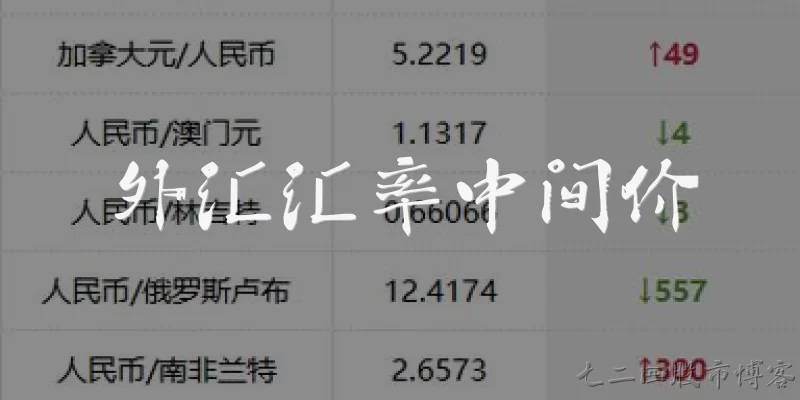
A: The central parity rate of foreign exchange is a daily reference exchange rate published by China's central bank, the People's Bank of China (PBOC). It serves as the midpoint for the trading band within which the yuan is allowed to fluctuate against a basket of currencies, primarily the US dollar. Each morning, the PBOC announces this rate based on a weighted average of market-maker quotes, adjusted to reflect supply and demand as well as global currency movements. The central parity rate is not a fixed rate but a guiding benchmark that helps stabilise the currency market and prevent excessive volatility. It influences spot exchange rates, corporate hedging costs, and cross-border investment decisions. Traders and economists closely monitor it as a signal of the central bank's monetary policy stance and its tolerance for currency appreciation or depreciation.
Q: How is the central parity rate determined each day?
A: The central parity rate is determined through a transparent, rule-based process. Before the market opens, the China Foreign Exchange Trade System (CFETS) collects quotes from a panel of market makers, including major banks. These quotes are based on the previous day's closing rate, overnight movements in major currencies, and the supply-demand balance in the domestic foreign exchange market. The PBOC then calculates a weighted average and may apply a counter-cyclical factor to smooth out pro-cyclical fluctuations. The final rate is published at 9:15 a.m. Beijing time. This mechanism aims to reflect market forces while allowing the central bank to maintain stability. It is a key tool for managing expectations and guiding the yuan's value without direct intervention in the spot market, although the central bank can still adjust liquidity or use other measures.
Q: Why does the central parity rate matter for global markets and businesses?
A: The central parity rate matters because China is the world's second-largest economy and a major trading partner for many countries. When the PBOC sets a stronger or weaker parity, it signals the direction of the yuan, which affects global commodity prices, export competitiveness, and capital flows. For multinational businesses, a change in the parity rate can alter the cost of importing Chinese goods or the value of profits repatriated from China. Investors watch it as a gauge of Chinese economic health and policy intentions. A sudden devaluation via the parity rate can trigger volatility in emerging market currencies and equities. Additionally, many financial products, such as non-deliverable forwards, are priced relative to it. Therefore, the daily central parity rate is one of the most anticipated announcements in Asian trading hours.
Q: How does the central parity rate differ from the spot exchange rate?
A: The central parity rate is a reference rate set by the PBOC before market open, while the spot exchange rate is the actual price at which currencies trade in real time. The spot rate fluctuates throughout the trading day within a band around the central parity—typically ±2% for the US dollar against the yuan. So, the parity is a midpoint, not a transaction price. For example, if the central parity is 6.5, the spot rate can move between 6.37 and 6.63. Market forces like order flow and news drive the spot rate, but the parity sets the boundaries. The PBOC can influence the spot rate by adjusting the parity, but it does not directly set the spot. This distinction is crucial because businesses use the spot rate for actual conversions, whereas the parity provides a policy signal and a baseline for forecasting.
Words of experience
Common scenarios of "Central parity rate of foreign exchange"
【Customer】 Hello, I'd like to exchange some US dollars for Chinese yuan. What's the current central parity rate?
【Bank Teller】 Good morning! The central parity rate announced by the People's Bank of China today is 6.8500. However, the actual exchange rate we offer includes a spread.
【Customer】 I see. So what's the rate you can offer me right now?
【Bank Teller】 For USD to CNY, our current buying rate is 6.8300 and selling rate is 6.8700. Since you're selling USD to us, we'll use the buying rate.
【Customer】 That's a bit lower than the central parity. Why is that?
【Bank Teller】 The central parity rate is a reference rate set daily, but market rates fluctuate. Our rates are based on the central parity plus a spread to cover risks and costs.
【Customer】 Okay. How much would I get if I exchange 1000 USD?
【Bank Teller】 Let me calculate: 1000 USD * 6.8300 = 6830 CNY. There's also a small commission fee of 50 CNY. So you'll receive 6780 CNY.
【Customer】 What if I exchange 5000 USD? Can I get a better rate?
【Bank Teller】 For amounts over 5000 USD, we can offer a preferential rate. Let me check... For 5000 USD, the buying rate would be 6.8350. That's 5000 * 6.8350 = 34175 CNY, minus 50 CNY commission, so 34125 CNY.
【Customer】 That sounds reasonable. Is the central parity rate the same for all currencies?
【Bank Teller】 No, the central parity rate is specific to each currency pair. For example, EUR/CNY might have a different rate. The PBOC publishes rates for major currencies daily.
【Customer】 What about the exchange rate for EUR to CNY?
【Bank Teller】 Today's central parity for EUR/CNY is 7.8000. Our buying rate for EUR is 7.7800 and selling rate is 7.8200.
【Customer】 Okay, but I'll stick with USD. Can I exchange now?
【Bank Teller】 Sure. Please fill out this form with your ID and the amount. Do you have your ID with you?
【Customer】 Yes, here it is. I'll exchange 5000 USD.
【Bank Teller】 Great. I'll process that at the rate of 6.8350. You'll receive 34125 CNY after the commission. Please sign here.
【Customer】 Done. When will the funds be available?
【Bank Teller】 The CNY will be credited to your account immediately. Here's your receipt. Thank you for banking with us!