Euro historical trends:What are the key historical exchange rate trends of the Euro since its introduction?
Q: What are the key historical exchange rate trends of the Euro since its introduction?
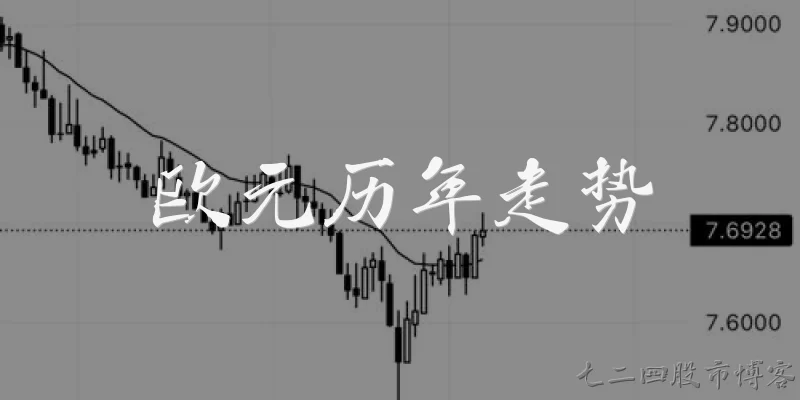
A: Since its launch in 1999, the Euro has experienced significant exchange rate fluctuations. Initially, it traded at $1.18 but quickly dropped to a low of $0.82 in 2000 due to concerns about the new currency's credibility. It then recovered, reaching an all-time high of $1.60 in 2008 during the global financial crisis. The Eurozone debt crisis from 2010 to 2012 caused another decline, with the Euro falling to around $1.05. In recent years, it has generally traded between $1.05 and $1.25, influenced by monetary policy divergences, economic growth differentials, and geopolitical events. These trends reflect the Euro's evolution from a fledgling currency to a major global reserve asset, though it remains sensitive to regional and global economic shocks.
Q: How have Eurozone interest rates evolved historically, and what impact did they have on the Euro?
A: Eurozone interest rates, set by the European Central Bank, have historically been a key driver of the Euro's value. In the early 2000s, the ECB maintained relatively high rates to establish credibility, supporting the Euro. During the 2008 financial crisis, rates were slashed from 4.25% to 1%, weakening the Euro. The subsequent debt crisis prompted rate hikes in 2011, briefly bolstering the currency before cuts resumed. From 2014, rates fell to near zero and even negative territory, pressuring the Euro downward. The recent hiking cycle starting in 2022, aimed at curbing inflation, strengthened the Euro. These trends illustrate how ECB policy cycles directly influence the Euro's attractiveness to global investors, often leading to predictable exchange rate movements.
Q: What were the main historical phases of Euro inflation and their effects on the currency?
A: Euro inflation has gone through distinct phases. In the early 2000s, inflation hovered around 2%, aligning with ECB targets and supporting Euro stability. The 2008 commodity boom pushed inflation above 4%, eroding purchasing power and temporarily weakening the Euro. Following the debt crisis, inflation fell below 1% for much of the 2010s, raising deflation fears and keeping the Euro subdued. In 2022, post-pandemic supply shocks and energy crises drove inflation to record highs above 10%, prompting aggressive ECB rate hikes that initially weakened then strengthened the Euro as markets adjusted. These inflation trends have shaped the Euro's real effective exchange rate and its role as a store of value, with periods of high inflation typically coinciding with currency depreciation until policy responses take effect.
Q: How has the Euro's role as a global reserve currency changed over time?
A: The Euro's role as a global reserve currency has evolved since 1999. Initially, it quickly gained share, reaching about 25% of global reserves by 2003, as countries diversified away from the US dollar. However, the Eurozone debt crisis in 2010-2012 raised doubts about the currency's stability, causing its reserve share to plateau and slightly decline. In recent years, it has stabilized around 20%, remaining the second-most held reserve currency after the dollar. Factors influencing this trend include the depth of Eurozone financial markets, ECB credibility, and geopolitical shifts. While the Euro has not surpassed the dollar, its historical trend shows a gradual, steady presence, with periodic challenges that test its appeal as a safe-haven asset.
Dialogue about
Common scenarios of "Euro historical trends"
【Historian】 Good morning, Alex. Today we're discussing the historical trends of the Euro. Where would you like to start?
【Student】 Good morning, Dr. Smith. I'd like to begin with the origins of the Euro. When was the idea first proposed?
【Historian】 The idea of a single European currency dates back to the 1960s, but it gained momentum with the 1979 creation of the European Monetary System (EMS) and the 1992 Maastricht Treaty, which set the stage for the Euro.
【Student】 So the Maastricht Treaty was crucial. What were the convergence criteria that countries had to meet?
【Historian】 Yes, the criteria included low inflation, low long-term interest rates, stable exchange rates, and limits on government debt and deficit—all aimed at ensuring economic stability before adopting the Euro.
【Student】 When did the Euro actually come into existence as a currency?
【Historian】 It was introduced in 1999 as an electronic currency for financial transactions, and physical coins and banknotes entered circulation in 2002. Initially, 11 countries adopted it.
【Student】 How did the Euro perform in its early years?
【Historian】 Initially, it depreciated against the US dollar, dropping to around $0.82 in 2000. But by 2008, it had appreciated to over $1.60, reflecting economic confidence.
【Student】 What caused that appreciation?
【Historian】 Factors included US trade deficits, high Eurozone interest rates, and the global financial crisis leading to dollar weakness. But the trend reversed with the Eurozone debt crisis.
【Student】 Yes, the debt crisis. How did that affect the Euro's value?
【Historian】 The crisis, starting in 2009 with Greece, caused the Euro to plummet to around $1.20 by 2010 and further to $1.05 in 2015, as investors worried about the currency's stability.
【Student】 What measures were taken to stabilize the Euro during the crisis?
【Historian】 The European Central Bank (ECB) implemented policies like quantitative easing and the European Stability Mechanism (ESM) to provide financial assistance to troubled countries, which helped restore confidence.
【Student】 How has the Euro trended since then?
【Historian】 It has fluctuated but generally stabilized. From 2015 to 2020, it ranged between $1.05 and $1.25. The COVID-19 pandemic caused some volatility, but the Euro remained relatively strong.
【Student】 What about the impact of Brexit on the Euro?
【Historian】 Brexit initially weakened both the pound and the euro, but the Euro recovered as the EU showed unity. The long-term effects are still unfolding.
【Student】 Looking ahead, what are the key challenges for the Euro?
【Historian】 Challenges include divergent economic policies among member states, potential fiscal integration, and external shocks like geopolitical tensions. The Euro's future depends on deeper integration and coordinated fiscal policies.